



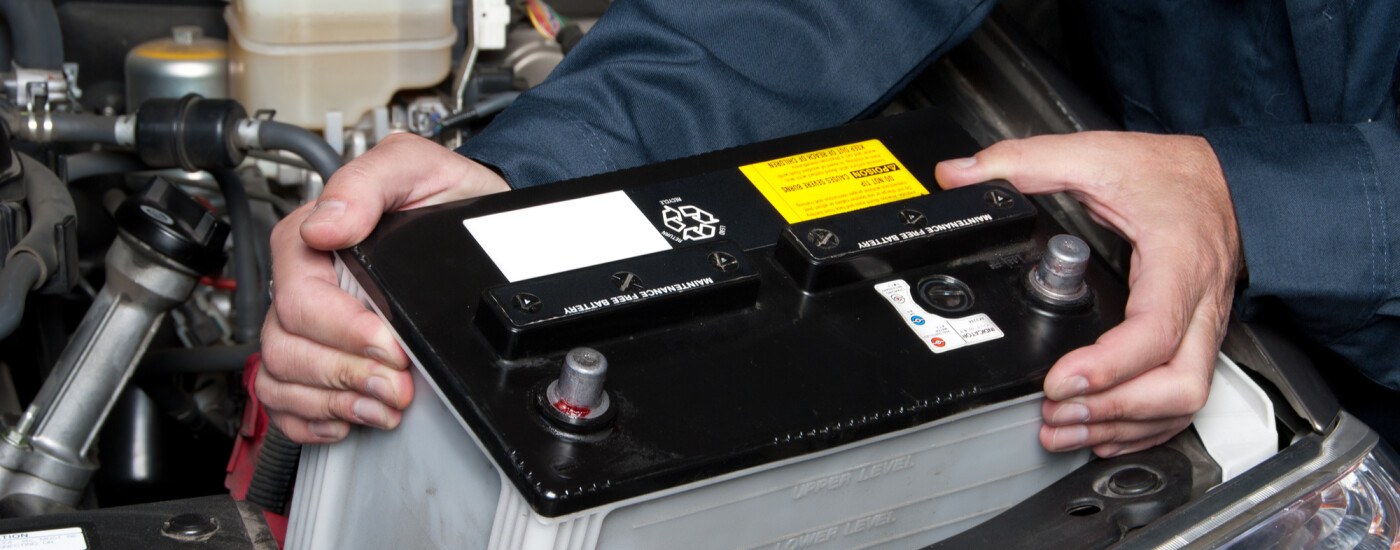
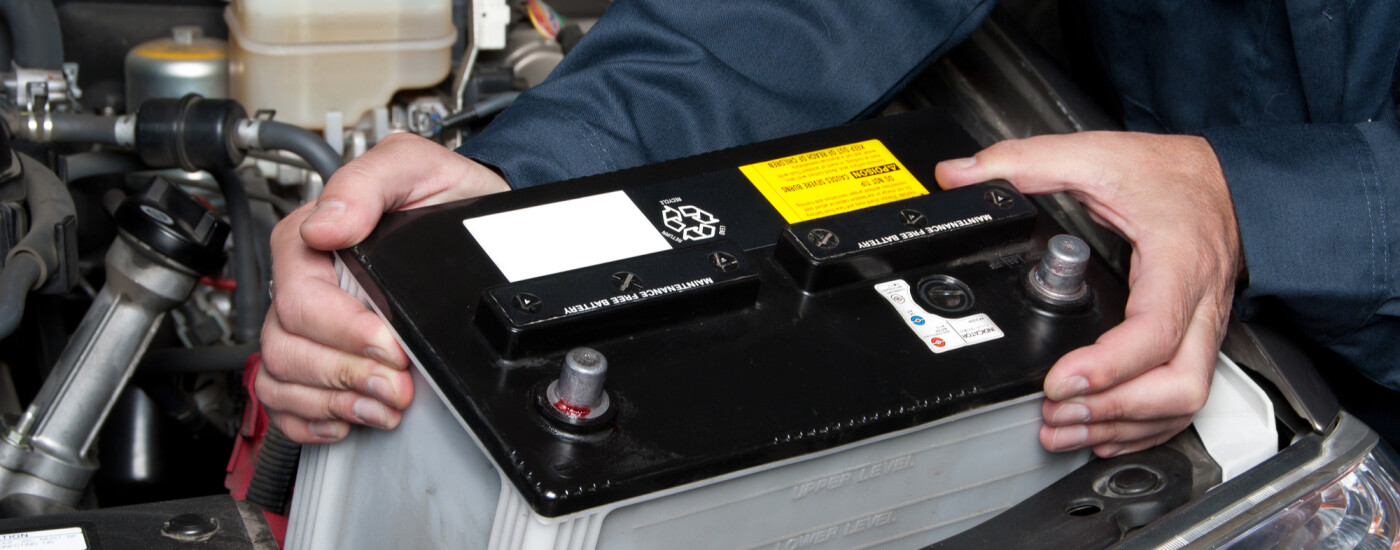
Battery Test
Cold doesn't usually kill a healthy battery. It exposes a weak one. As temperatures fall, the chemistry inside slows down. At the same time, colder oil makes the engine harder to turn over, so the battery has to give more just when it has less to give.
Early October
- Check the age. Most batteries have a date sticker on top, and once yours is past about three years, a test is worth a few minutes.
- Look at the terminals. White or green crust there chokes off current, and it's easy to clean off.
- Make sure the hold-down is snug, since constant vibration shortens battery life.
Before the first frost
Ask for a load test, not just a voltage reading. A battery can show a fine reading while parked and still fall short under the strain of starting.
If you drive a Nissan LEAF or ARIYA, do this check too. Electric models still use a small 12-volt battery to wake up the car's systems, and it wears out like any other.
Fluid Levels
The battery gets most of the attention, but fluids are the other half of a cold start. Oil that's overdue thickens and breaks down, which makes the starter work harder on chilly mornings.
What to check
- Engine oil: Check the level and how close you are to your next change. If it's due in November, doing it now means fresh oil going into winter.
- Coolant: Check the reservoir with the engine cold, and never open a hot radiator cap. Coolant protects against freezing as well as overheating, and it loses strength over time.
- Washer fluid: Swap the summer mix for a winter blend made for freezing temperatures.
- Brake fluid: Take a quick look at the level and color in the reservoir.
When
Handle oil and coolant the first weekend of the month, before overnight lows really dip. Washer fluid can wait until the first frost warning, but no later than that.
Your owner's manual names the oil grade your engine was built for. Stick with it, because the right viscosity matters most on a cold start.
Tire Pressure in Cold Air
Here's one that surprises a lot of drivers. The tire pressure light comes on during the first cold morning of the season, then goes off by lunch. Nothing is wrong with your tires. Air contracts as it cools, and tires lose roughly 1 psi for every 10-degree drop in temperature.
How to check it right
- Check in the morning, before you drive, while the tires are cold.
- Use the pressure on the sticker inside the driver's door jamb, not the maximum printed on the sidewall.
- Check the spare too, if your Nissan has one.
- Look at the tread while you're down there. A penny test works in a pinch.
How often
Check once a week through October, plus any time there's a big overnight drop. Underinflated tires wear faster on the edges, use more fuel, and lose grip on wet leaves. Those leaves pile up on side streets around Patchogue this time of year.
If the light stays on after you've added air, have it looked at. A slow leak or a bad sensor won't fix itself.
Wiper and Defrost Check
Seeing clearly matters as much as starting. October mornings bring fog off the bay, frost on the glass, and low sun in your eyes on the Sunrise Highway commute.
Wipers
- Run them with washer fluid and watch for streaks, chatter, or skipped spots.
- Lift the blades and run a finger along the rubber edge. If it's cracked or hard, it's time for new ones.
- Clean the inside of the windshield too. A film there adds glare and fogs up faster.
If the blades need replacing, our parts department can match the right size to your model.
Defrost and heat
Turn on the front and rear defrost and make sure both clear the glass in a reasonable time. Listen to the blower on every speed. Make sure the A/C runs along with the defroster, since it pulls moisture out of the air and clears fog quicker.
A weak defroster can point to a cabin air filter clogged with summer pollen and leaves. It's an inexpensive fix, and the heater usually feels stronger afterward.
Your Week-by-Week October Plan
If one big checklist feels like a lot, spread it across the month. None of these steps takes long. A little each week means you're not scrambling when the first real cold snap arrives.
- Week one: Check battery age and terminals, look at the oil level, and note when your next service is due.
- Week two: Check coolant and brake fluid, then switch to winter washer fluid.
- Week three: Check wipers, defrost, and the cabin air filter. Test the heat on a cool evening.
- Week four: Check tire pressure and tread, plus the spare.
Small habits that help
Short trips are hard on a battery, because the alternator doesn't have time to replace what starting used up. If most of your driving is quick runs around town, try to fit in a longer drive on the Long Island Expressway once a week.
Turn off headlights, interior lights, and accessories before you shut the car down. Keep a jump starter pack or cables in the trunk, along with an ice scraper and a flashlight. Check your key fob battery too, since a weak one gets fussy in the cold.
When to Visit Nissan 112 Service
Some things are worth handing off. Bring your Nissan in if you notice any of these:
- A slow or labored crank, even once
- A battery warning light, or headlights that dim at idle
- A battery that's three years old or more and hasn't been tested
- Coolant that's low again after you topped it off
- A tire pressure light that won't go out
Our certified service technicians can load-test the battery, check the charging system, and look over fluids, belts, and tires in one visit. That matters because a dead battery isn't always the battery's fault. A failing alternator, or something drawing power while the car sits, can drain a perfectly good one.
Making the visit easy
The best time to come in is before you need to, and in October that means now. You can book service online and pick a time that fits your week. While you wait, there's complimentary Wi-Fi, coffee, and snacks, so you can get some work done or just relax.
Patchogue, NY
- Get a load test on any battery that's about three years old or more, before the first real cold snap.
- Check tire pressure on cold mornings, because cold air drops it even when nothing is wrong.
- Spread the checks across October and bring the car in at the first slow crank or warning light.
FAQ Common questionsHow can I tell my battery is about to fail?Watch for a slower crank than usual, a clicking sound when you turn the key or press the start button, headlights that dim at idle, or a battery warning light. Age matters too. A battery past three years is worth testing even if it seems fine, because cold weather is often what finally pushes it over the edge. Should I let my Nissan idle for a long time on cold mornings?Not really. Modern engines need only a short warm-up. After that, gentle driving warms them faster than idling. Long idling burns fuel and doesn't recharge the battery much, and you should never let a car run in a closed garage. If my battery dies, can I just jump it and keep driving?A jump will get you going, but it doesn't fix whatever drained the battery. A battery that's fully run down once in cold weather is often near the end of its life, or there may be a charging or power-draw problem. Have it tested soon after the jump so it doesn't leave you stuck again the next morning. |
Let us take care of it Book online in a minute and pick a time that works for you. Or call (631) 651-1987 · 730 Medford Ave, Patchogue |